
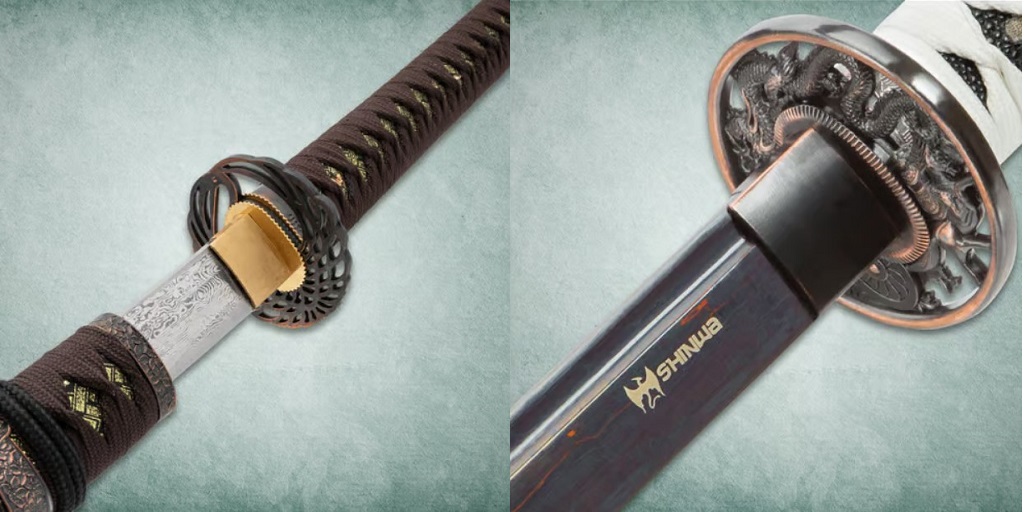
Sword collectors, swordsmiths, and martial artists know the value of any sword, but especially a katana Damascus blade. But what makes it so valuable?
Damascus steel is considered expensive and highly valued, especially when crafted into katanas, because of its unique composition, complex craftsmanship, and strong appeal to collectors.
Unlike ordinary steel, Damascus steel is created by layering at least two different steel alloys and forging them into a single solid bar. This process produces dramatic, wave-like patterns that make every blade visually striking and completely unique.
No two Damascus patterns are ever identical, which immediately gives the steel artistic and collectible value. Its beauty is not just the result of design, but a natural outcome of layered metals fused through heat and pressure.
Damascus Steel in History
Historically, Damascus steel earned a reputation as a material used for elite weaponry and master-level craftsmanship. Its legendary status grew because it combined durability, sharpness, and visual elegance.
Over time, this reputation carried into the modern era, making Damascus steel a prized material among sword collectors, bladesmiths, and enthusiasts. Even though today’s Damascus steel is produced with modern methods rather than ancient techniques, it still symbolizes tradition, skill, and rarity.
Forging a Legend
In modern bladesmithing, Damascus steel is admired not only for its performance but also for its artistic qualities. Many people view a Damascus blade not just as a tool, but as a piece of art shaped through intense labor and precision.
The process of making Damascus steel is complex and requires a skilled hand. To create it, a bladesmith must stack alternating layers of different steels, each chosen for specific properties such as strength, flexibility, or contrast.
These layers are heated to extremely high temperatures, often between 2,200 and 2,300 degrees Fahrenheit, so they can weld together properly. If the timing or temperature is incorrect, the steel will not bond, and the entire process can fail.
The billet is forged, folded, and sometimes restacked repeatedly, leading to layer counts that can reach into the hundreds. The more layers the blade contains, the tighter and more intricate the final pattern becomes, which is a major factor in its appeal.
This process requires time, labor, and practiced skill, making high-quality Damascus steel difficult to produce and naturally more expensive. Only highly experienced smiths can consistently create flawless katana Damascus blades.
Since Damascus steel is in the category of functional art, it often commands a higher price because it combines beauty with performance. This makes collectors expect excellent edge retention, toughness, and durability from Damascus steel, raising the standards and the cost of production.
A Sword Made of Damascus Steel
When Damascus steel is shaped into a sword, especially a katana. its value increases even more. A katana requires significantly more material, forging time, and precision than a smaller blade.
The sword must be properly balanced, have an accurate curve, and be expertly sharpened. Buyers are not just paying for a weapon; they are paying for a masterpiece that blends functionality with artistry. Damascus katanas are often produced in limited quantities, which increases demand and makes them even more desirable for collectors.
A katana such as the Shinwa Black Serpent, with its hand-forged blade, serpent-inspired details, traditional handle wrapping, and lacquered scabbard, is an example of a sword that appeals to enthusiasts because of both craftsmanship and visual impact.
Retailers like True Swords offer a range of katana Damascus blades that vary in design, purpose, and price, giving collectors options for display, training, and long-term ownership.
If you’re someone looking for a blade that offers craftsmanship and has a strong collector demand, a katana made of Damascus steel could be the one you are looking for. It’s more than a weapon, it’s a unique work of art, a symbol of tradition, and a prized centerpiece in any collection.