
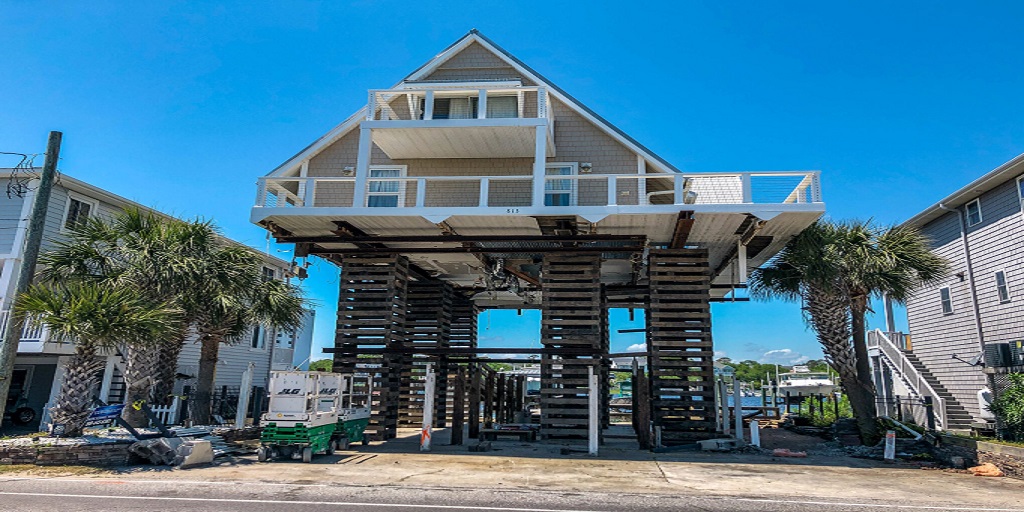
If you’re reading this, you’re probably hovering somewhere between curiosity and a growing realization: “Maybe my home actually needs to be lifted.” That’s a big thought, and totally normal. House lifting isn’t common for most homeowners, but when it makes sense, it can be one of the most impactful decisions you make for your home’s safety, future value, and peace of mind.
Here we cover what house lifting is, what it can do for you, and what to expect if you invest in professional house lifting services.
What House Lifting Actually Is
In simple terms, house lifting (also called house raising or jacking) is the process of elevating your entire home off its existing foundation using heavy-duty hydraulic jacks and support systems. Your house gets lifted up, supported while work happens below, and then set down on a new — often stronger — foundation.
Contractors like Wolfe House & Building Movers specialize in this kind of work, whether it’s for homes, historic buildings, or commercial structures, and they do it across wide regions in the U.S.
It’s not a quick backyard weekend project. It’s engineering-driven, requires skilled crews, and uses major equipment. But with the right team, it’s surprisingly precise and predictable (yes, really).
Why Homeowners Choose to Lift Their Houses
People decide to lift their homes for a few big, practical reasons — and sometimes emotional ones too.
1. Protect Your Home from Flooding
If your home sits in a flood-prone area, near a river, lake, coast, or in a neighborhood that’s seen its share of storms, lifting it can significantly reduce flood risk. Elevating above the estimated flood plain helps with insurance and can literally save you stress and money in the long run.
2. Replace a Failing Foundation
Foundations can crack, settle, or fail over decades. When simple patching or leveling won’t cut it, lifting lets professionals replace or reinforce the foundation properly from underneath. That’s sometimes the only way to give your home a long, stable life.
3. Add Space or Headroom
This part is exciting: lifting your house isn’t only about fixing problems, it can create opportunities. By elevating your home, you can add a new story, increase basement or crawl space headroom, or even carve out entire new living areas without tearing off the roof.
You might be thinking of that basement with just a couple feet of clearance; lifting could give it enough height to be a real bonus room.
What the Lifting Process Feels Like
House lifting is a project, not a quick fix. Here’s what to expect:
- Careful Planning: Before a single jack goes in, an experienced team will evaluate your home, talk with you about your goals, and explain the logistics.
- Hydraulic Precision: Crews use a series of hydraulic jacks and steel beams to raise the structure — sometimes just a few inches, sometimes 10–12 feet or more — slowly and evenly so the house stays intact.
- Work Underneath: Once the house if lifted, the foundation is replaced, improved, or expanded. If you’re adding space, walls and new floors might be added before your home comes back down.
- A Temporary Disruption: While the physical work happens, you will need to find a temporary place to stay. Utilities are disconnected and reconnection happens on the other end. That’s part of managing safety and logistics, and most homeowners find it well worth the temporary inconvenience.
Is It Right for You?
The honest answer is: it depends on your priorities, your home’s condition, and your goals. If flooding or foundation issues are looming concerns, or you see an opportunity to expand space without starting from scratch, house lifting can be an incredibly empowering choice.
But don’t go into it lightly. Asking questions, getting multiple assessments, and talking with people who’ve been through it — just like you’re doing now — is the best start.
When done with thoughtful planning and skilled professionals, house lifting is one of those projects that can actually feel transformative rather than disruptive.
If you find yourself reading reviews, looking at old photos, and daydreaming about “what if,” that curiosity is a good thing. Now you’re informed enough to take the next step, and that’s exactly where a good house lifting conversation should begin.