
One of the most important (and occasionally overlooked) aspects of growing plants indoors is ensuring that they get adequate light exposure.
The truth is, you can water and feed your plants all you want, but without providing them the appropriate ambient light levels (and power) they won’t be able to use that fertilizer; in fact, with inadequate light, fertilization can burn and even kill plants.
Moreover, plants will not develop healthy tissues or foliage cuticles without adequate light exposure. Suffice it to say simply that your grow lighting infrastructure is critical.
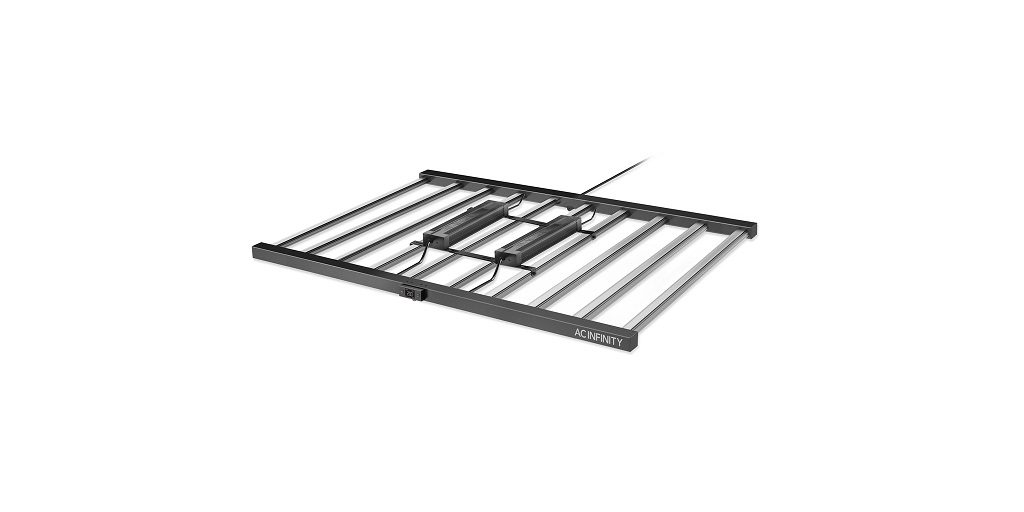
This might have you wondering if 1000 watt LED grow lights will be sufficient for your setup, given the fact that this is a good amount of power, all things considered.
The answer is it depends. Let’s take a closer look based on two important determining factors: how much space you’re trying to light and what plants you’re growing.
How Much Power You Need: Space and What You’re Growing
One of the most important considerations you need to take into account when determining how much power (and how many lights) you need is how much space you are trying to illuminate, which determines how many plants you will be growing.
One way to approach this is by calculating wattage per square foot. The type of plants you are growing and what phase of development they’re in will determine how many watts/square foot you need, but as a general rule, low-light plants need between 10 and 25 watts per square foot. Therefore, assuming you are growing 10 square feet of low-light plants, 1000 watt LED grow lights are more than sufficient. In fact, they might be too much; it’s important to recognize that some plants flourish not only in indirect light, but in shade.
On the other end of the spectrum we have plants that have much more rigorous demands in terms of how much light they need. Some need as much as 50 to 80 watts per square foot, if not more. Therefore, if you grew 10 square feet of one of these species, 1000 watt LED grow lights would only just be sufficient.
At the same time, you should also consider the number of hours of light provided; some plants need only a few hours of bright direct light per day; others are full-sun cultivars that will not flourish unless they are provided with 8 or more hours of strong, direct light per day.
Other Considerations
In addition to the overall power of the lights, you should consider the cultivar of plant you will be growing, its current stage of growth, and how many hours of light it will need per day. A 1000 watt grow light might be objectively adequate, but not if you don’t keep it on for long enough.
On top of that, there are numerous advantages that LED grow lights offer that other types of grow lights cannot. Among these are that LED lights are enormously energy efficient and long-lasting, and cost only a small fraction to operate when compared to other types of grow lights.
In addition, LEDs are SSLs, or solid-state lights, which are made without a conventional bulb; they feature only a lens cover and an emitter, and many are shatter-resistant, if not effective shatterproof, making them more durable and safer than grow lights with glass bulbs.
Where to Get the Best LED Grow Lights for Your Setup
Interested in learning more about the best LED grow lights and what they can offer? Visit AC Infinity; they carry not only high quality grow lights, but also a variety of other indoor growing essentials. Visit their website and get in touch with their customer service team if you have any questions.