
Winslow Homer occupies a singular position in the history of American art. Few artists so completely reshaped how a nation saw itself, its landscape, and its relationship to nature. Homer’s impact was not confined to a single movement or generation; rather, his work quietly but decisively altered the trajectory of American painting, illustration, and cultural self-understanding.
His legacy rests on his ability to merge realism, emotional restraint, and elemental power into images that feel both intensely specific and universally human. This overview covers his influence and where you can find Winslow Homer prints and gifts online.
Redefining American Artistic Identity
Before Homer, much of American fine art looked outward for validation. European traditions, particularly academic painting and romantic idealization—dominated artistic ambition. Homer helped sever that dependency. He demonstrated that American life, American labor, and American landscapes were not secondary subjects but worthy of serious artistic treatment on their own terms.
His work insisted that the everyday experiences of Americans, farmers, fishermen, soldiers, children, and sailors—contained enough gravity, drama, and meaning to stand beside Old World history painting. This shift was not loud or theoretical; it was visual and experiential. Viewers did not need to be told that America had its own artistic voice. Homer showed them.
Bridging Illustration and Fine Art
One of Homer’s most lasting impacts lies in his seamless movement between commercial illustration and high art. Early in his career, he worked as an illustrator, particularly during the Civil War, producing images that documented daily life rather than glorifying battle. This experience shaped his mature style: direct, observant, and unsentimental.
At a time when illustration was often considered inferior to “fine art,” Homer carried its clarity, narrative strength, and accessibility into painting. He proved that technical skill and mass communication did not dilute artistic seriousness. This helped legitimize illustration as a foundational training ground for artists and influenced generations who moved fluidly between media.
His example paved the way for later American artists to embrace graphic clarity, storytelling, and immediacy without apology.
A New Language of Realism
Homer’s realism was not merely descriptive; it was philosophical. He rejected melodrama and moralizing in favor of restraint. Emotions in his work are rarely exaggerated. Instead, tension emerges through posture, environment, and circumstance. This quiet realism made his paintings feel truthful rather than staged.
Importantly, Homer avoided romanticizing hardship. Whether depicting soldiers returning from war, children at play, or fishermen battling the sea, he allowed ambiguity to remain. There are no clear heroes or villains—only people navigating forces larger than themselves. This approach deeply influenced American realism and later movements that valued authenticity over spectacle.
Influence on American Modernism
Although Homer is often associated with realism, his late work anticipates modernism in significant ways. His bold compositions, simplified forms, and focus on raw experience resonated with artists who would later reject academic constraints altogether.
Modern American painters admired his independence, his refusal to align with schools or manifestos, and his belief that observation mattered more than theory. Homer became a model for artistic self-reliance: an artist who trusted his instincts, evolved continuously, and allowed subject matter to dictate style rather than fashion.
Cultural and National Legacy
Beyond technique and style, Homer reshaped American cultural confidence. His work helped establish the idea that American art did not need European approval to be legitimate. Museums, collectors, and institutions began to view American painters as central contributors to global art history rather than peripheral imitators.
Today, Homer’s paintings are foundational in major collections and frequently cited as touchstones for discussions about realism, nature, labor, and national identity. His influence extends beyond painting into photography, film, and visual storytelling, where restraint, realism, and environmental tension remain powerful tools.
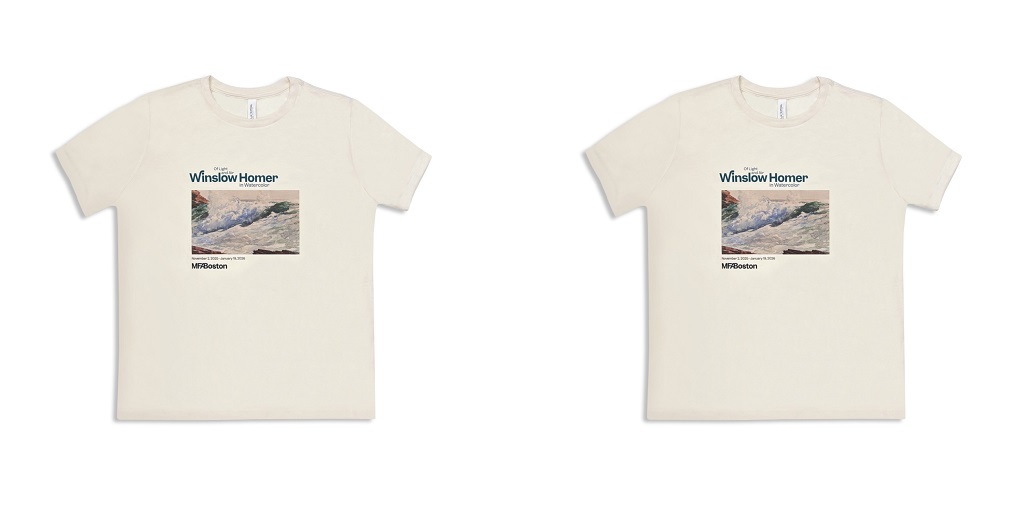
For those who want to explore his art, we recommend taking a look at the Museum of Fine Arts, Boston’s selection of Winslow Homer prints, art socks, totes, scarves, and other gifts, which capture the heart of his works for everyone to enjoy.